How Many Versions of Bibles Are There in English

There are over 900 Bible translations available in English today! What makes each version different and unique? 

This article gives you descriptions to 10 popular versions and translations to introduce you to the unique characteristics of each. These selections represent the two primary approaches to translation (“formal equivalent” and “functional equivalent”), as well as both older and more recent translations. Most modern translations benefit from a high level of scholarship and accuracy, because as time goes on, we are learning more from research and new findings. This short list is shown in alphabetical order; for the more complete curated list of English translations that’s kept updated, see A Brief Description of Popular Bible Translations” at American Bible Society Resources (from which this article is adapted). 

List of 10 Popular English Bibles

Christian Standard Bible (CSB, HCSB)
 This is a 2017 update of the Holman Christian Standard Bible (2004), an original translation from Greek and Hebrew manuscripts. Its scholars, most of whom are from conservative and evangelical church traditions, have aimed at a balance between word-for-word and thought-for-thought translation—as close to the original wording as possible while emphasizing clarity for modern English readers. It uses a seventh-grade reading level. 

Contemporary English Version (CEV) 
The CEV is a meaning-based (or functional equivalent) translation done in a contemporary style using common language. It was designed to be understood when read and heard out loud, not just when it is read silently. It is one of the better Bibles for children and youth, as well as for new Bible readers who are not familiar with traditional Bible and church words. It was first published in 1995 and revised in 2006. Learn more at CEV.Bible.

English Standard Version (ESV)
The ESV was published in 2001 (revised in 2007 and 2011) and is another revision of the Revised Standard Version (1971 edition) that follows a formal equivalence approach. It is quickly growing in popularity, particularly among conservative Protestants. 

Good News Translation (GNT) 
The GNT (also known as Today’s English Version or Good News Bible) was one of the first meaning-based (or functional equivalent) translations of the Bible into English. It was originally published in 1976 and was revised in 1992. The GNT presents the message of the Bible in a level of English that is common to most of the English-speaking world. The GNT is still used widely in youth Bible study groups and in less formal worship services. Editions are also available for Roman Catholic readers. Learn more at GNT.Bible.

King James Version (KJV)
The KJV (also known as the Authorized Version) is a word-for-word translation (or formal equivalent) originally published in 1611 at the request of King James I of England. It has been frequently reprinted and its spelling updated, and most copies today are slightly adapted from a 1769 edition. The translators mostly aimed at making a clear and accurate translation from the original languages. So many people have used the KJV over the centuries that it has become the single most important book in shaping the modern English language. Many of the best and most ancient Hebrew and Greek manuscripts of Bible books have been discovered since 1850, so the KJV could not make use of them. In many cases, it is helpful to read and study the KJV alongside another more recent translation. The KJV is still the most widely owned and used English translation in the United States. 

The Message (MSG)
The Message is a popular paraphrase of the Bible by Eugene Peterson, who used the original Greek and Hebrew texts and tried to bring their “feel”—their tone, rhythm, and idiom—directly into contemporary English. It is presented as a Bible more for personal reading than for study or public reading. The Message is often useful to read side by side with other, more word-for-word translations. Peterson’s choice of words can help new readers unlock the sense of the text and can help seasoned Bible readers find fresh energy in passages that have become too familiar. 

New American Bible (NAB, NABRE) 
The NAB was originally published in 1970 as a meaning-based translation intended primarily for Roman Catholic readers. The New Testament was revised in 1986, shifting more toward a word-for-word or formal translation. The full Bible with a newly revised translation of the Old Testament and extensive notes was released in 2011 as the New American Bible, Revised Edition. The NABRE is useful for individual study. The older NAB is approved for public worship for American Catholics. 

New American Standard Bible (NASB)
The NASB, first published in the 1960s, is an excellent example of a formal translation of the Bible in English. It is probably the most “word-for-word” type translation available today. Because of this, the NASB is a good version to use in Bible study where one is concerned with the form of the original Hebrew and Greek. The most recent edition of the NASB was published in 1995. 

New International Version (NIV) 
The NIV was a completely new translation, but it was strongly influenced by the tradition of the King James Version The full Bible was published in 1978. It was revised in 1984 and again in 2011. A blend of form-based and meaning-based translation types, the NIV is one of the most popular English Bibles in use today. It is equally useful for individual study and public worship, especially among more traditional and conservative denominations. 

New Living Translation (NLT) 
The NLT is a meaning-based revision of the Living Bible (LB). The Living Bible is a popular 1971 paraphrase of the 1901 American Standard Version. (A paraphrase is different from a translation. For a paraphrase, authors take an English text and put it into their own words, that is, the way they would say it themselves. A paraphrase does not begin with the Hebrew and Greek texts as a translation does.) The New Living Translation involved comparing the LB to the original-language texts, and then making changes so that the NLT is now a true translation. The NLT is a good translation to use with youth and adults who have difficulty with the traditional language of a formal equivalent translation. 

 ### 

P.S. One scholar, Steven J. DeRose, has itemized nearly 400 English Bible Versions, Translations, and Paraphrases, as of 2009. For a more detailed explanation for why there are so many translations, see the article, “What are the different English Bible versions?” (GotQuestions.org).

5 Top Churches Leading Digital Tech Innovations in 2020

Some of the most innovative churches doing digital ministries online started years ago, before the global pandemic and the Coronavirus crisis forced churches to take their worship services online. While for many churches, livestreaming their sermons and worship songs is a new and challenging thing, other churches have made use of online tools and social media more intentionally as a part of its church life and outreach into its local community as well as the world. Because, after all, online tools and mobile apps have affected nearly all aspects of life, churches have this great opportunity to connect with people online beyond the constraints of synchronous time and physical space.

Looking at the examples of these church’s creativity in using digital technologies, mobile apps, and web platforms, can inspire churches of all sizes to think more creatively about using today’s readily-available online technologies and mobilizing the people for being the church in the 21st century. Yes, churches can be tech innovators on the cutting edge.

A List of High-Tech Innovative Churches

1. Life.Church

Life.Church is most often cited as the most innovative technology-driven church. The digital missions of Life.Church developed digital platforms and apps for its own use as well as for other churches and people to use worldwide. For individuals, over 425 million installs of the YouVersion Bible App has brought the Word of God to mobile devices everywhere, along with Bible App for Kids. For churches, Life.Church generously gives away thousands of free resourcesChurch MetricsDevelop.Me, and Church Online Platform

Excerpts from Coronavirus in Oklahoma: Use of Life.Church’s online platform surges in age of COVID-19 and Use of Life.Church’s online platform continues to climb:

Online church attendance through Life.Church’s Church Online Platform continued to increase significantly this past weekend, breaking records for the second consecutive weekend, Life.Church leaders said.

“We saw more than 7 million people attend church services during the March 21-22 weekend, which is up from 4.7 million the weekend before and up from the previous weekend average of a little over 1 million,” Rachel Feurborn, the church’s public relations manager, said in a news release.

“With more than 15,000 new churches signing up for the tool in the last couple weeks, we expect weekend attendance numbers to continue to climb.”

Last week, the Rev. Bobby Gruenewald, the Edmond-based church’s pastor-innovation leader, said that the number of churches using the Church Online Platform technology had surged recently as church leaders around the globe responded to the coronavirus pandemic. The tool enables churches to stream their own church services and build community online by using the chat and one-on-one prayer features. Life.Church leaders said the platform is easy to use, and churches can use a smartphone or camera to record their sermon, upload it to a site like YouTube and begin streaming in less than an hour.

2. Crossroads Church

This 2018 Christianity Today article described how Crossroads Church uses entrepreneurial strategies for gospel ends—

To stay ahead of whatever changes might come, the church employs two full-time market researchers, as well as a sort of research and development division. The “skunkworks” team borrows its name from the corporate-world moniker for a group that operates autonomously and often secretly to pioneer new ideas. Crossroads’ leadership entrusts the skunkworks team, full of young Christian entrepreneurs, with building ideas for the future.

They aren’t supposed to play it safe. These days, for example, the high-tech team is looking into ways Crossroads could use artificial intelligence in ministry and worship. “Their task—figure out a way to put Crossroads out of business,” Tome said. “Anything short of sin is up for grabs.”

Matt Welty, the campus pastor for Crossroads Anywhere, oversees the church’s extensive digital presence. Welty said: “In a culture in which the traditional model of church is becoming less relevant, finding ways for people to grow spiritually and interact with God is probably going to be a path forward for the church. I get excited that there are many people who would not ever walk into a church building, but who would download and app. I’m excited that church is no longer limited to a building.

The church has developed its Crossroads Anywhere app, with a description of: “This App is designed to help you forge a relationship with God. It’s a blend of challenge and support, connection and contentment. Getting to know God doesn’t have to be a big grand gesture. It can be a simple interaction through your phone and this app can help facilitate that.”

3. Churchome

Featured in RELEVANT Magazine, “For Judah and Chelsea Smith, Online Church Has Been the New Normal for Years“—

In 2018, Judah and Chelsea Smith had a vision for City Church in Seattle, Washington: a new kind of church experience. This church would feature worship, teaching, community, opportunities to serve — basically everything common to the church as we know it, with one caveat: it’d be online. To the Smiths, this app represented a new kind of virtual experience that would offer church to a new generation more comfortable with digital relationships. They called it Churchome.

The announcement was met with no small degree of skepticism at the time but that was then. Now Churchome’s style of Sunday service has become the norm for almost every church in the country. The coronavirus pandemic has flipped a lot of assumptions about what church can and even should look like on their heads, and whatever you think of Churchome, there’s no denying that it has become an accidental pioneer of our new normal.

What kind of impact has this mobile app had? According to this 2019 CBN News article

Since its launch last year, the Churchome Global app has been downloaded more than 200,000 times.

The ministry reports 60% of the app users are female (40% are male), with 45% of members under the age of 34. Eighty percent of users are based in the US with all 50 states being represented, while the app is also used in over 200 cities across the globe. 

Since its launch, the app has also had over 460,000 prayers that have been prayed on their Pray feed. 

4. Hillsong Church

Hillsong Church started in Australia back in 1983 and now has physical locations in 28 countries around the world. As a part of its strategy, the church has launched Hillsong Technology with a vision for “Connecting technology with the everyday needs of the local church.” The Hillsong Technology blog shares its learnings with the public, and its team has built 2 products: Verris is an events app created to help attendees engage with events and Brushfire provides online ticketing and registration for churches and ministries around the world.

Also take a listen to this audio interview with Rob Beach on Soul Search (ABC Radio National, in Australia). Here’s the description—

“Hillsong Church has made a global name for itself, with its chart-topping worship music and celebrity followers. And, in step with its young demographic, it’s also an early adopter of new technology. Rob Beach is the Chief Information Officer (CIO) for Hillsong Global, and CEO of Hillsong Technology, he knows better than anyone how the church is adopting and adapting to digital technology. He tells Meredith Lake about his own religious journey, and why he thinks Hillsong needs to double as a faith-tech incubator.”

3 quotes from this interview that the Hillsong Technology team loved—

  1. “We just showed up each weekend and more and more people kept coming.”
  2. “We are always in a space of experimenting and it’s constantly changing.”
  3. “We want to create an environment where individuals with technology solutions for the Church can flourish.” 

5. Christ’s Church of the Valley (and Strategic Partners)

For 13 years, Jon Edmiston led the Creative Technologies team at Christ’s Church of the Valley (CCV) and developed a leading custom church management system. That platform is called Rock RMS, used by hundreds of churches around the world, and managed by a nonprofit ministry, Spark Development Network. Collaborative teamwork brought this product to life, with a small network of strategic partners and early adopters, like Christ FellowshipLake Pointe ChurchLife.ChurchNewSpring ChurchShepherd ChurchSoutheast Christian Church, and Willow Creek Community Church. Rock RMS is built by churches for churches. 

Rock RMS is a community-supported open source CMS that combines Relationship Management System (RMS) and Church Management System (ChMS) into one. Rock RMS was launched in 2014 and has always had a plurality of churches that form its community and gives feedback and sponsorship that support its technology road map for developing and improving features. Since Rock RMS is open-source and designed for integration with an open API, the possibilities are endless. Basic features include: personal and family profiles, groups, check-in, event registration, engagement pathway and milestones, reports, workflows, data automation, business intelligence, website builder, event calendar, giving, and finances. With great power comes great responsibility, meaning that churches thinking about using Rock RMS will need to have people who are competent in technology administration and management.

A Clear Description for a Valid Domain Name

It’s easy to take domain names for granted, like the air we breathe, as we together experience how the Internet has changed the first world and the current generation of humanity. But finding a clear and concise description for what is considered a valid domain name or not is not so easy.

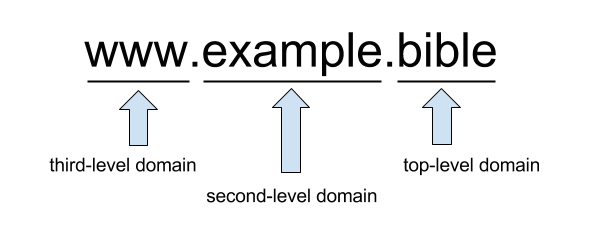
ingredients of a domain name

A sufficiently good definition would need to be technically accurate and understandable for domain names consisting of Latin characters only. A robust definition would need to account for non-Latin characters and IDNs (Internationalized Domain Names) too, for total compatibility, known as Universal Acceptance. Here’s what I’ve found so far:

via ICANN Beginner’s Guide to Domain Names 

… domain names in gTLDs can be registered using the 26 letters of the basic Latin script (A to Z), and can include the numbers 0-9. They can also include a hyphen “-”, although not as the first or last character of the domain name.

via Wikipedia entry for Domain Name —

Domain names may be formed from the set of alphanumeric ASCII characters (a-z, A-Z, 0-9), but characters are case-insensitive. In addition the hyphen is permitted if it is surrounded by characters, digits or hyphens, although it is not to start or end a label.

via Section 3.5 of RFC 1034 (also Section 2.3.1 of RFC 1035) —

The labels must follow the rules for ARPANET host names. They must start with a letter, end with a letter or digit, and have as interior characters only letters, digits, and hyphen. There are also some restrictions on the length. Labels must be 63 characters or less.

via domain.me/policies —

Domain name length: .Me domain names must be at least 3 characters (second level) or 2 characters (third level) and a maximum 63 characters in length, excluding the extension (.me, org.me, etc.). Allowable characters: Only the Latin alphabet letters a-z, digits, and hyphens are currently accepted in a domain name. Domain names cannot begin or end with hyphens.

via gandi.net/domain/name/info —

Syntax: from 2 to 63 alphanumeric characters or a hyphen (excluding in the first and last place)

To summaraize, synthesizing from these various descriptions and a few others, here’s my attempt at crafting the wording a more clear and concise explanation for a domain name, particularly the string to the “left of the dot”:

A second-level domain may be 1 to 63 characters in length, consisting of alphanumeric characters (A-Z, 0-9). A second-level domain may also use the hyphen (”-”) character, except in the first or last position.

The above description may be a sufficient description for domain names that only use Latin characters. And all this effort is to make it easier to explain what domain names are permitted for use here at the .BIBLE top-level domain.

However, the Internet today also has domain names A robust and complete definition would need to account for non-Latin characters and IDNs (Internationalized Domain Names) too, known as Universal Acceptance, for total compatibility.

Because today’s Internet, with the new gTLD program, these domain names (and websites) are valid: ביטוחרכב.co.il and 為替レート.jp

To get at a more comprehensive definition of a valid domain name on the Internet is a bit more challenging. Here’s a couple references:

via gnso.icann.org/en/issues/new-gtlds/pdp-dec05-fr-parta-08aug07.htm —

In the absence of standardization activity and appropriate IANA registration, all labels with hyphens in both the third and fourth character positions (e.g., “bq—1k2n4h4b” or “xn—ndk061n”) must be reserved at the top-level. [cf. Internationalized Domain Names]

via website.com/beginnerguide/domainnames/8/5/idn-domain-names.ws —

IDN are domain names that are written in foreign languages, like Chinese, Japanese or Russian. IDN stands for Internationalized Domain Names. IDN domain names allow people from all over the world to communicate websites, domain names and URLs in their native languages.

Most domain names registered to date are written using the 26-character Latin/English alphabets and numbers, an encoding called ASCII. IDN allows for the use of non ASCII characters in domain names. When an IDN is registered, the foreign characters are encoded in Punycode using a number of algorithms. Punycode is simply an ASCII version for the IDN, allowing it to resolve with the current internet system.

Punycode domains can be identified by the “xn-” beginning.

Having a clear explanation for the valid syntax of domain names is a very helpful part to getting all the browsers, apps, softwares, and emails to properly function with all domain names everywhere.

What Makes A Great Domain Name?

Finding the right domain name is everything — in a digital world, your domain name is your welcome mat. It needs to be short, easy-to-remember and brand-related.

Does yours? We can help. 

Experts suggest that groups choose a logical but unique domain name, specific to their organization. 

And with the decreasing use of the prefix www, a readable and brand-specific name is more important than ever.

This is one of the reasons we created the .BIBLE top-level domain, to empower new domain names that end with the .BIBLE extension. 

Our top-level domain isn’t just for Bible organizations, it’s for all Bible-inspired groups—more than 1,000 organizations have registered for .BIBLE domain names, like nonprofits, educational groups, mission organizations, Bible-driven ministries, publishers, translators and others. And since updating their domains, these sites have maintained their search engine optimization (SEO). 

In fact, research has found that new, top-level domains could have better SEO performance than relevant keywords.

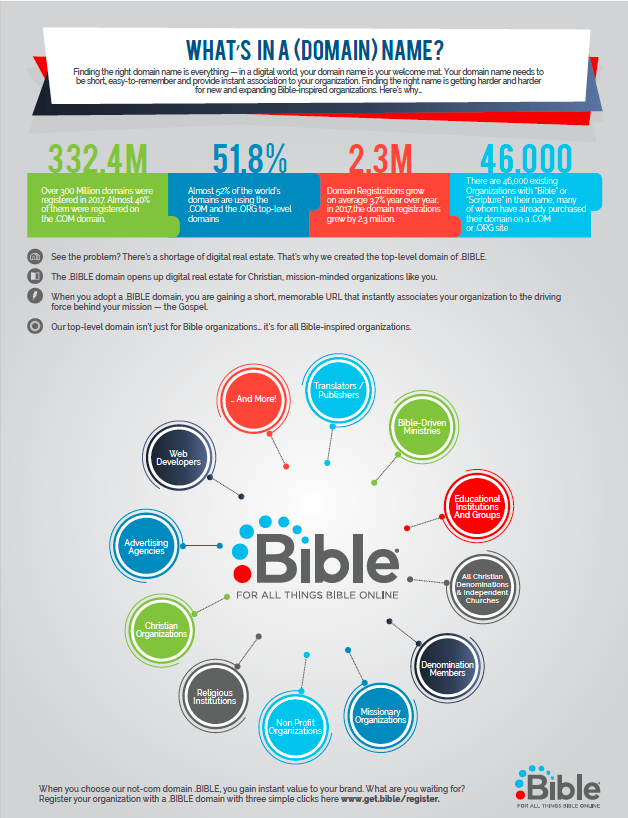
What's in a Domain Name?
(click the image to download infographic in full-size PDF format)

Is it worth switching to a shorter and better domain name?

Decision makers with organizations cannot haphazardly jump at trying something new because there’s a new technology with potential and opportunity. Careful research and consideration has to be made before making a decision that would re-allocate resources to change things up dramatically. Those resources could involve staff time, actual monetary finances, or a change in the current state of reputation and credibility when it comes to the web addresses. 

While status quo does keep things as they are, the world is constantly changing around us, especially in a digital age. To implement the right changes strategically and wisely can be the path to significant growth and performance that wouldn’t be possible with minor changes to status quo.

The Biggest Change on the Internet

One of the biggest changes is the internet expansion program, known as new gTLDs (generic top-level domains), that started in 2014. This expanded the internet namespace to over 1,000 new domain extensions far beyond the popularized legacy endings of .com, .net, and .org. Yes, there are hundreds and thousands of domains that have meaningful endings like: .app, .bank, .bible, .blog, .church, .club, .coffee, .events, .live, .media, .network, .news, .photo, .training, .wiki, and many more.

To quantify just how fast these new gTLDs are growing, also known as “not-coms,” the number of not-com websites in the Alexa Top 1 Million (a list of the most popular websites based on traffic) has increased by more than 300% since September 2015, with not-com registrations growing from 7.3 million to 23.9 million.

Here are 3 examples that are helpful to learn from and observe their implementation of this innovation.

Life.Church was lifechurch.tv

Church leaders are beginning to recognize these new domain extensions. Many are becoming aware of .church domains when they’re being used by influential churches. Life.church switched from its previous domain “lifechurch.tv” to “life.church” in October 2015.

Consider how big of a decision this was: the change involved only dropping 2 characters in their domain name, but it affected more than 70,000 in its attendance along with all of the church’s branding, stationery, signage, communications, and more. And yet the church’s leadership made this change as an opportunity to refresh its vision, its logos, and its web address. When our team asked the Life.Church team about how this impacted their church, their response was reassuring: “no negative impact occurred and people continued using their website as usual.”

Other larger churches have also moved their web address, including: menlo.churchccv.church, and city.church

Find.Bible was findabible.org

Find.Bible is the worldwide web directory of Bibles and biblical resources in the 6,000+ languages of the world, cataloging print Bibles, print-on-demand Bibles, digital Bibles, audio Bibles, visual Bibles and Bible resources – in multiple formats. Find.Bible ensures that the world’s Bibles and great biblical resources are easy to find, secure, use and share – in every language. While it is possible to search for Scripture and Bible resources online, the sheer quantity of available content is overwhelming; and, not every Scripture is discoverable on search engines.

Find.Bible is currently cataloging over 3,500 Bibles and 77,000 resources as a collaborative and cooperative effort by members of the Forum of Bible Agencies International and the Digital Bible Society.

When we asked the Find.Bible team why getting a .BIBLE domain name was important, they declared: “Having a short and meaningful domain name like Find.Bible has helped people to more easily remember our web address. In the past when we shared a web address, people often didn’t remember whether the domain name had a .COM or .ORG (or something else) on the end. Now we can say that the web address is just Find.Bible and there’s no extra ending to add. People are getting it because it just makes sense!”

Benefits of a New Domain Extension

You might ask, then, why change? Here are some of the benefits to this new domain: it saves people time from typing the previously excessively long domain name (cf. typing fewer characters can save many hours of time), it’s friendlier to mobile users, and it adds that extra “grab attention” factor because it stands out by not being yet another dot-com website. Plus, it’s much easier to find a shorter domain name that’s available.

There you have it. 3 successful upgrades to better domain names by Christian ministry organizations. And there are many more.

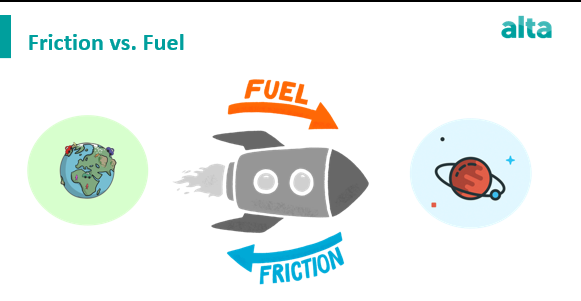
With this new internet namespace expansion, the opportunity is now available for your organization to get the very best domain name that can be self-explanatory for what it is that you’re offering. Domain names that makes plain sense and clearly tells people what to expect at that web address reduces any remaining friction that keeps people from going to your website.

Just the Top Bible Websites, Plain and Simple

Bible websites make the Word of God widely available to all people around the world. The most valuable resource for all humanity has become that much more accessible on the internet!

But what are the top Bible websites on the Internet? Does a top list refer to its popularity, its quality, or something else? Putting together a list of the top Bible websites is somewhat subjective, selecting a set of criteria to evaluate features, functions, designs, and usability. And that can stir up some contention and competition, and we don’t want that.

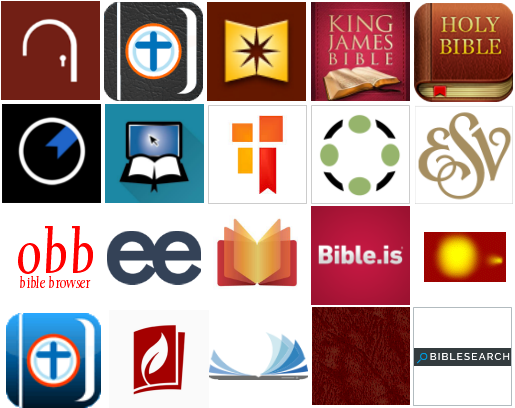
Another way to compile a websites list is based on the most traffic*. Before the list is revealed, let’s see if you know the logos of the 20 popular Bible websites: (answers will be listed below, row by row from left to right)

the 20 most popular Bible websites that provide free access to scripture and study tools

And for the reveal… the 20 most popular Bible websites with a very brief description:

  1. biblegateway.com – providing the Bible online for over 20 years, currently with over 70 languages and 180 versions (a division of The Zondervan Corporation)
  2. biblehub.com – provides quick access to many Bible versions and multiple languages, topical studies, interlinears, sermons, commentaries (a production of the Online Parallel Bible Project)
  3. biblestudytools.com – with multiple Bible versions in English and a large resource library for in-depth Bible study (Salem Web Network)
  4. kingjamesbibleonline.org – the King James Version of the Bible; the most popular website for the most popular version
  5. bible.com – home for YouVersion and the Bible app (Life.Church)
  6. bible.org – home of the NET Bible (New English Translation), “where the world comes to study the Bible”
  7. blueletterbible.org – with multiple versions of the Bible, linked with Bible-centered study aids and courses (a ministry of Sowing Circle)
  8. biblia.com – “Bible Study Online” (a service of Faithlife / Logos Bible Software)
  9. youversion.com – “a simple, ad-free Bible that brings God’s Word into your daily life,” links to Bible.com
  10. esvbible.org – English Standard Version of the Bible by Crossway—an “essentially literal” translation of the Bible in contemporary English
  11. Bible.oremus.org – the Bible and prayer resources used in the Church of England and in the wider Anglican Communion and elsewhere
  12. EasyEnglish .Bible – EasyEnglish is clear and simple English (vocabulary with a smaller word count), developed by MissionAssist
  13. ebible.com – “eBible aims to capture all the answers, to all the questions, about all the verses in the Bible.”
  14. bible.is – “Bringing the Bible to everyone in the world in their heart language, in text and audio, free of charge”, a ministry of Faith Comes By Hearing
  15. O-bible.com – the Bible in English and Chinese (GB and Big5)
  16. biblez.com – Bible website with “Zip Search With AutoComplete,” part of the BibleHub.com suite
  17. mybible.com – nice visually-designed online Bible and Bible verses with Facebook covers and images for social sharing
  18. ebible.org – links to an online study Bible by Digital Bible Society with robust UX and other Bible resources
  19. kingjamesbible.com – provides the King James Bible in HTML, viewable and downloadable, by JohnHurt.com
  20. bibles.org – many Bible versions and languages, with desktop and mobile websites, provided by American Bible Society, and free Bible tools (widget, highlighter, API) to bring the Bible to your audiences

With the Internet being world wide and many other languages besides English, surely there are many more websites online making the Bible freely available.

Plus, there are many other Bible websites with Bible software, apps, content, study materials, videos, media, and so on; though the list here is primarily focused on just the Bible, plain and simple.

See a list of more than 700 Bible websites and apps at ForAllThings.Bible >>

What Bible websites can you envision? 

These are exciting times for the Internet around the world as the new developments related to .BIBLE domain names are launching to create the future of the internet. New technological developments open the door for creativity, innovation, and new possibilities.

How are you inspired by the Creator who has created humans in His image to be creative like He is creative?

For example, here’s a wild idea. With personal technologies becoming a closer part of our digital lifestyles pretty much all the time, what could a smart website named something like RealTime.Bible do for people? Could personalization and customization be connected to timely relevance for just the right Bible verse at the right time? God can do far more than we can imagine!

* website traffic research based on publicly-available data from sites like Similarweb.com, Compete.com, Alexa.com

Names in the Bible have meaning. What about .BIBLE domain names?

Have you noticed how some people in the Bible had their names changed? Often the biblical text will explain why their names changed. Here’s a couple of examples, with emphasis added to show the reason for the new name:

In Genesis 17:1-6, Abram was renamed Abraham:

When Abram was ninety-nine years old, the Lord appeared to him and said, “I am the Almighty God. Obey me and always do what is right.”… God said, “I make this covenant with you: I promise that you will be the ancestor of many nations. Your name will no longer be Abram, but Abraham, because I am making you the ancestor of many nations.”

In Genesis 32:28, Jacob was renamed Israel:

The man said, “Your name will no longer be Jacob. You have struggled with God and with men, and you have won; so your name will be Israel.”

There are many other biblical characters with name changes, as well as people’s names with its meaning explained, like:

Genesis 25:24-26—The time came for her to give birth, and she had twin sons. The first one was reddish, and his skin was like a hairy robe, so he was named Esau. The second one was born holding on tightly to the heelof Esau, so he was named Jacob.

Matthew 1:21—She will have a son, and you will name him Jesus—because he will save his people from their sins.”

Matthew 1:23—“A virgin will become pregnant and have a son, and he will be called Immanuel” (which means, “God is with us”).

Wes Woodell summarized the important meaning of names in his blog post, The Significance of Names in the Bible, He explained how names are significant in the Bible, and how they serve a variety of functions. This list is a recap of his devotional:

6 Reasons Why Names are Important in the Bible

  1. A biblical name could record some aspects of a person’s birth.
  2. Biblical names sometimes expressed the parents’ reaction to the birth of their child.
  3. Biblical names were sometimes used to secure the solidarity of family ties.
  4. Biblical names could be used to communicate God’s message.
  5. Biblical names were also used to establish an affiliation with God.
  6. Biblical names are given to establish authority over another, or to indicate a new beginning or new direction in a person’s life.

What name will you use? 

As you can see, names are very important in the Bible. Now that .BIBLE domain names are available on the Internet, these new web addresses can be very important and meaningful too.

From this short Bible study above, we see how people who already had names were given new names. This means that if your website already has a domain name, you might be inspired to take on a new domain name that emphasizes its intent to communicate God’s message in the Bible, quickly identify with the Bible, or to indicate a stronger focus in your website’s ministry.

If you have a brand new digital ministry idea that is Blbie-related, it can be launched with a new .BIBLE domain name to show it’s meaningpurpose, and destiny, just like how a biblical name was given to a newborn baby. For example, you can help people with how to name a newborn child using names in the Bible. You could easily launch a website with a .BIBLE domain name like BabyNames.Bible that’d perfect for that!

The time is here and now. Individuals and organizations can now register .BIBLE domain namesthat are more shareable, memorable, and meaningful at any accredited registrar.